My Guitars
Almost everything a guitarist does happens between the hands and the instrument, and almost none of it is visible from the hall. These are the two guitars I play, and what it took to make them fit.
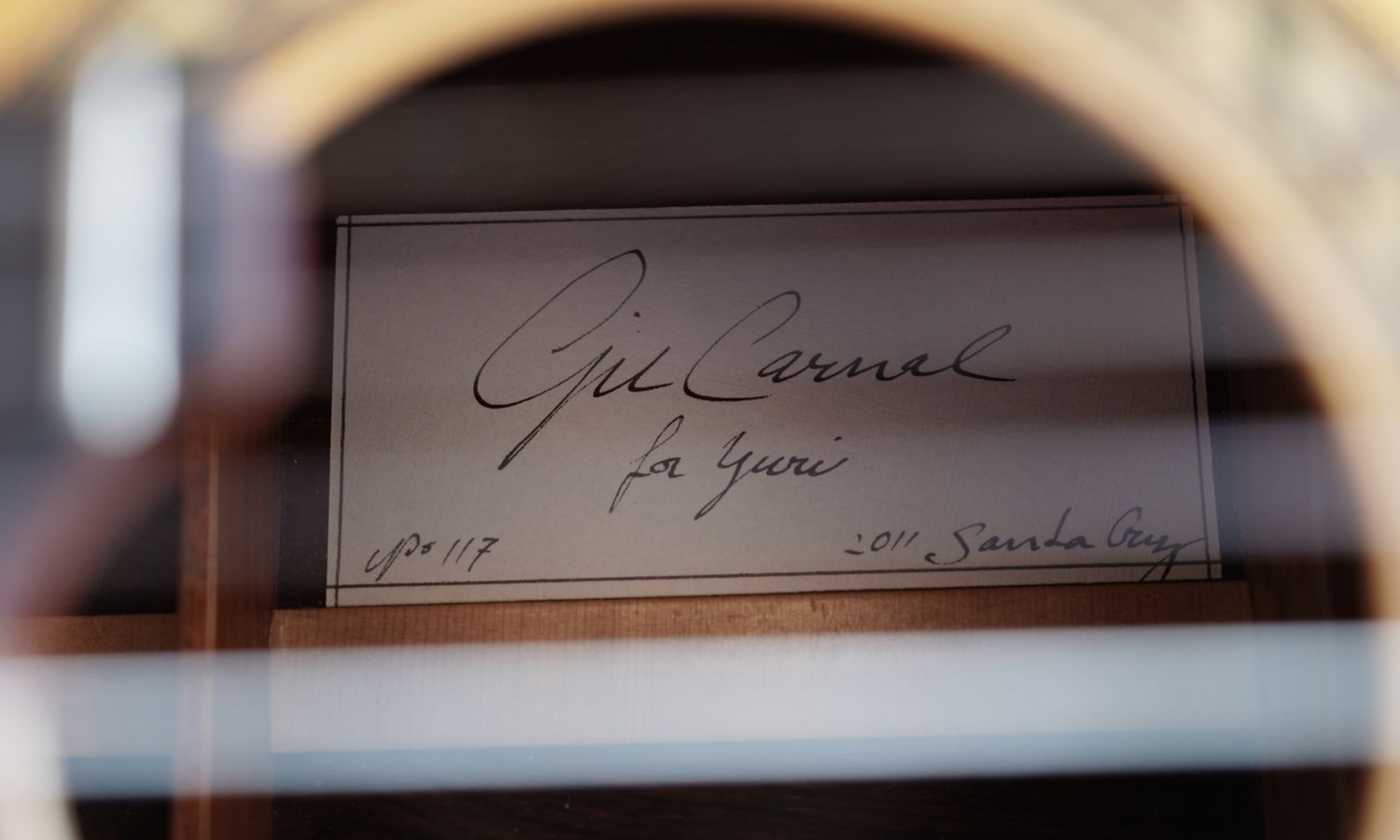
Gil Carnal № 117
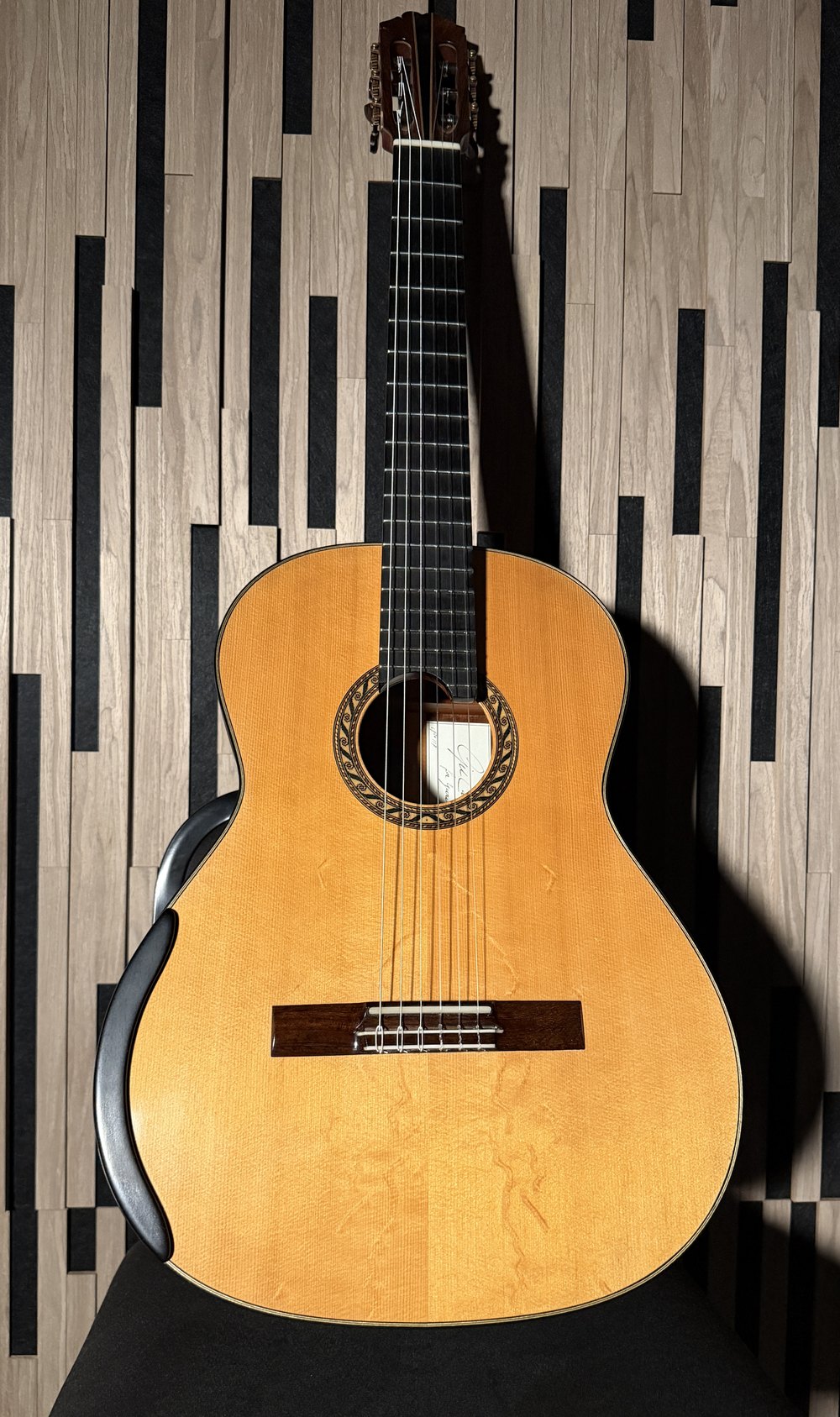
- Maker
- Gil Carnal
- Number
- № 117
- Built
- Santa Cruz, California, 2011
- Top
- German spruce, bear claw
- Back and sides
- South American cocobolo
- Neck
- Mahogany, floating
- Finish
- French polish
- Tuners
- Scheller
Gil Carnal was a concert guitarist before he was a maker. Swiss-born, raised in his father's woodshop, he came to California in 1979 and built alongside Kenny Hill for twenty years before opening his own workshop in 2000, convinced that the traditional classical guitar had gone as far as it could and that his job was to find more volume and sustain without giving up the tone.
So № 117 is lattice-braced, a grid of balsa and carbon fiber under the top, with a neck that floats free of the body. The result is an instrument that sounds extremely powerful and still has a beautiful tone, an enormous dynamic range, a very even balance between notes, and a sustain that goes on and on. The setup is as considered as the build: the action adjusts across all six strings at once, and the neck itself can be tilted so the trebles sit at a different height from the basses.
This guitar fills concert halls like no other instrument I know.
It was an honor to create this instrument for you and has been an ongoing pleasure to hear it brought to life in concert and recital.Gil Carnal
Robert Ruck № 1061
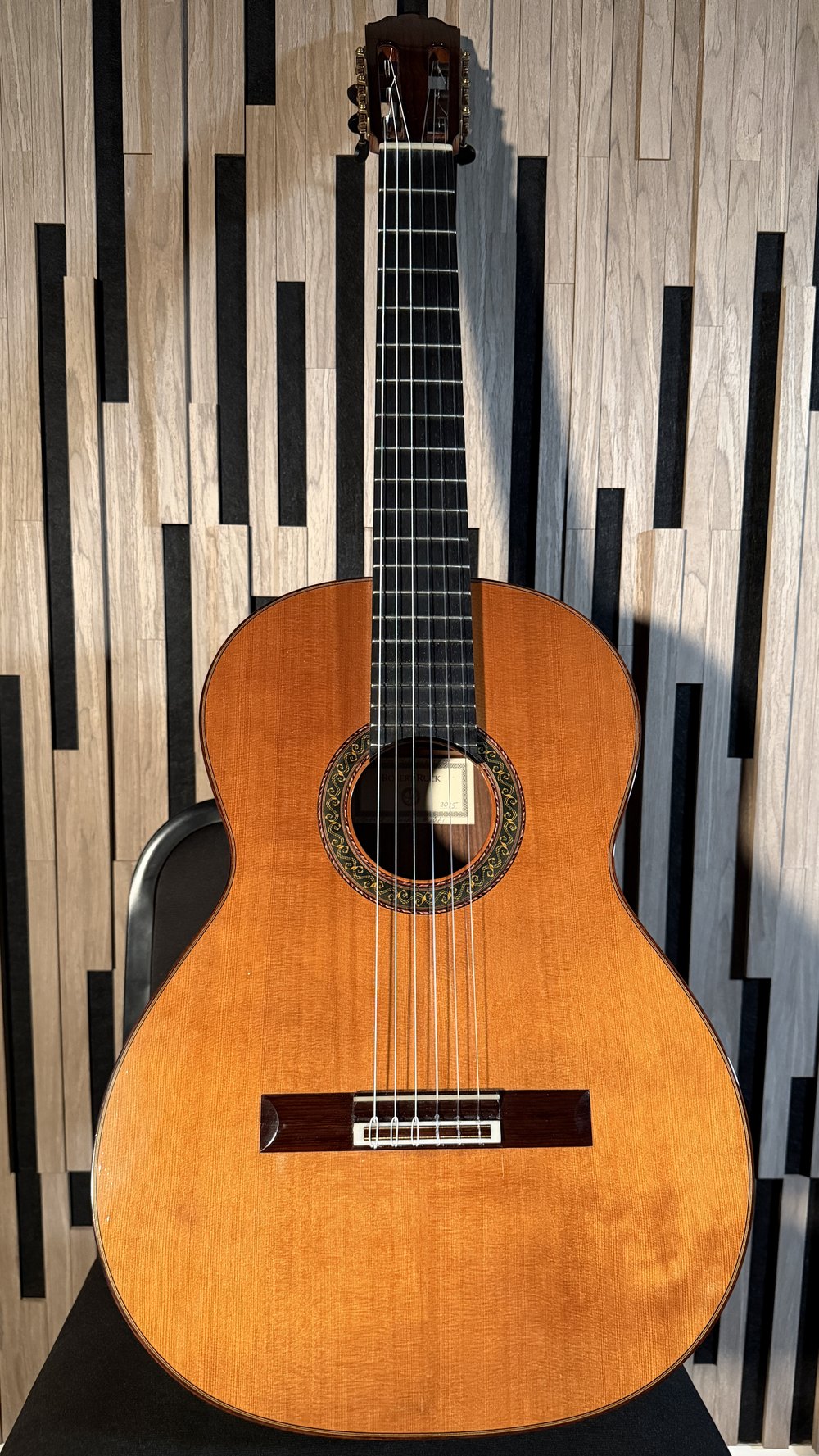
- Maker
- Robert Ruck
- Number
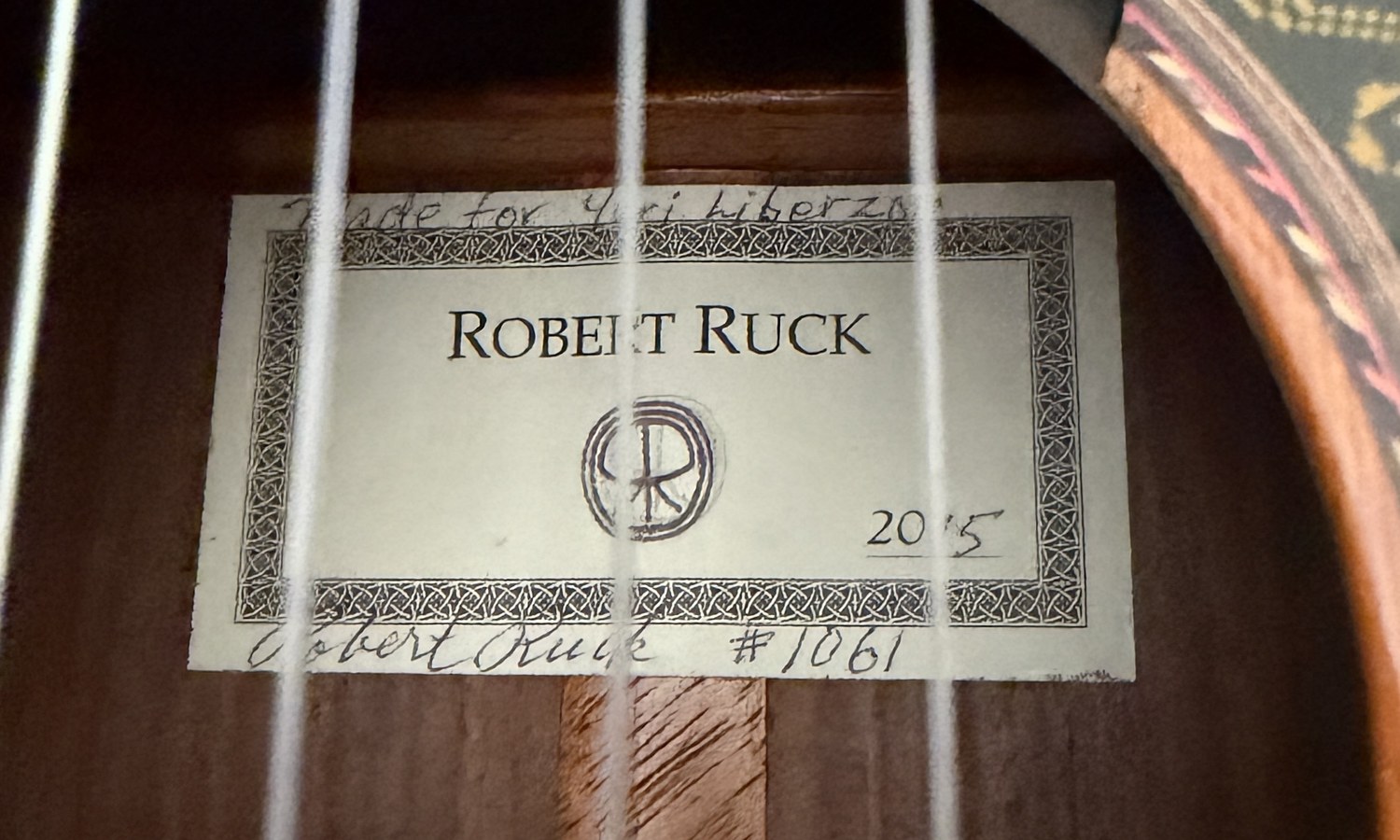
- № 1061
- Built
- To order, 2015
- Top
- Western red cedar
- Neck
- Spanish cedar
- Scale length
- 637 mm
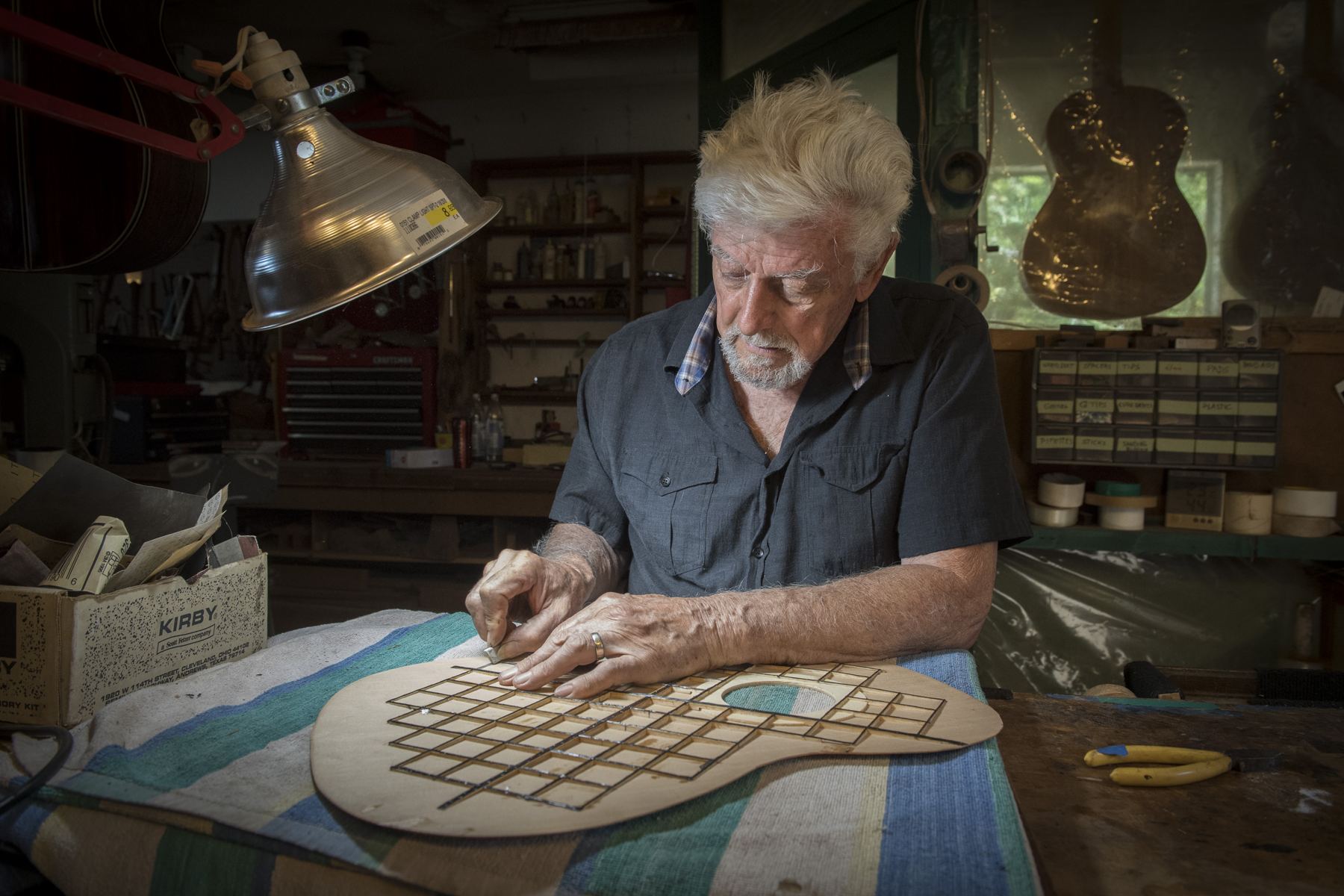
Robert Ruck was born in Milwaukee in 1945, finished his first guitar in 1966, and never studied under a master: an Irish pattern-maker taught him to sharpen a chisel, and he worked the rest out himself. By the time the Guitar Foundation of America put him in its Hall of Fame in 2016 he had built more than a thousand guitars, for Manuel Barrueco, Sharon Isbin, Pepe Romero, Leo Brouwer and Berta Rojas among many others. He died in August 2018.
I came to his guitars through Manuel Barrueco, my teacher at Peabody. In 1972, on word that a man in Miami was building extraordinary instruments, Manuel, then nineteen, traveled down to try one. It was Ruck's fifty-eighth guitar. “I remember distinctly trying No. 58 and thinking it was the most beautiful-sounding guitar I had ever heard in my life.” He played it for more than twenty years. When the student of that student went looking for a guitar, there was only one maker to call.
Where the Carnal is modern, the Ruck is traditional, and it sounds it: warm and brilliant at once, every note with its own beauty and color. It has a deep voice and is extremely well balanced. It asks for more physical strength than the Carnal does, and every extra effort comes back as power, without giving up any of the tone. Ruck once set down what he thought a concert guitar owed its player, and it reads like a description of this one.
A wide spectrum of tone color. Evenness — equal power and sustain from the lowest bass to the highest notes. Tone quality that inspires. One instrument should cover the gamut from Renaissance to atonal music. And finally, playability, or none of the other qualities are accessible.Robert Ruck, in American Lutherie, 2008
The accident
Something heavy fell on № 1061 and punctured the soundboard. By then Robert Ruck had died, and there was no possibility of the man who built it putting it right.
I knew the difference that makes. When № 611 was damaged, years earlier, Ruck himself rebuilt it, and it came back better than it had been before. That guitar went back to Manuel in the end: it came from my teacher and it returned to him. This time there was no maker to send it to.
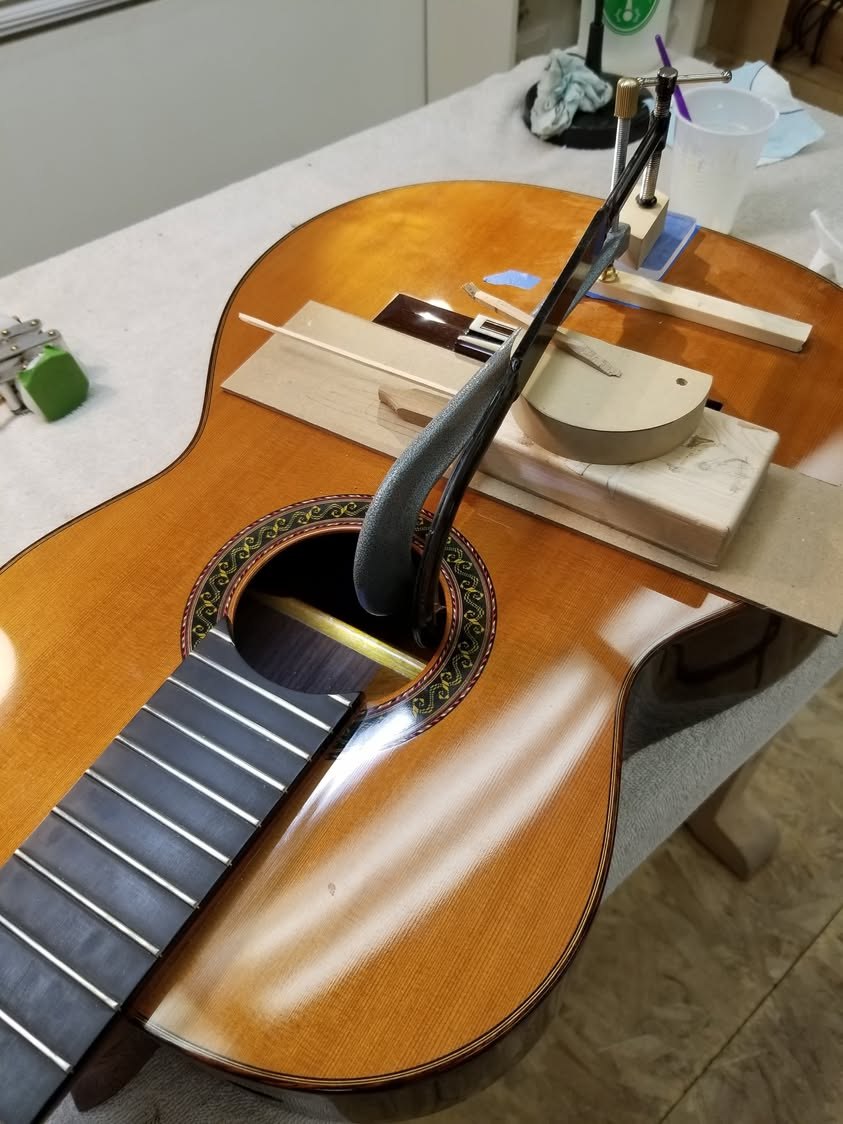
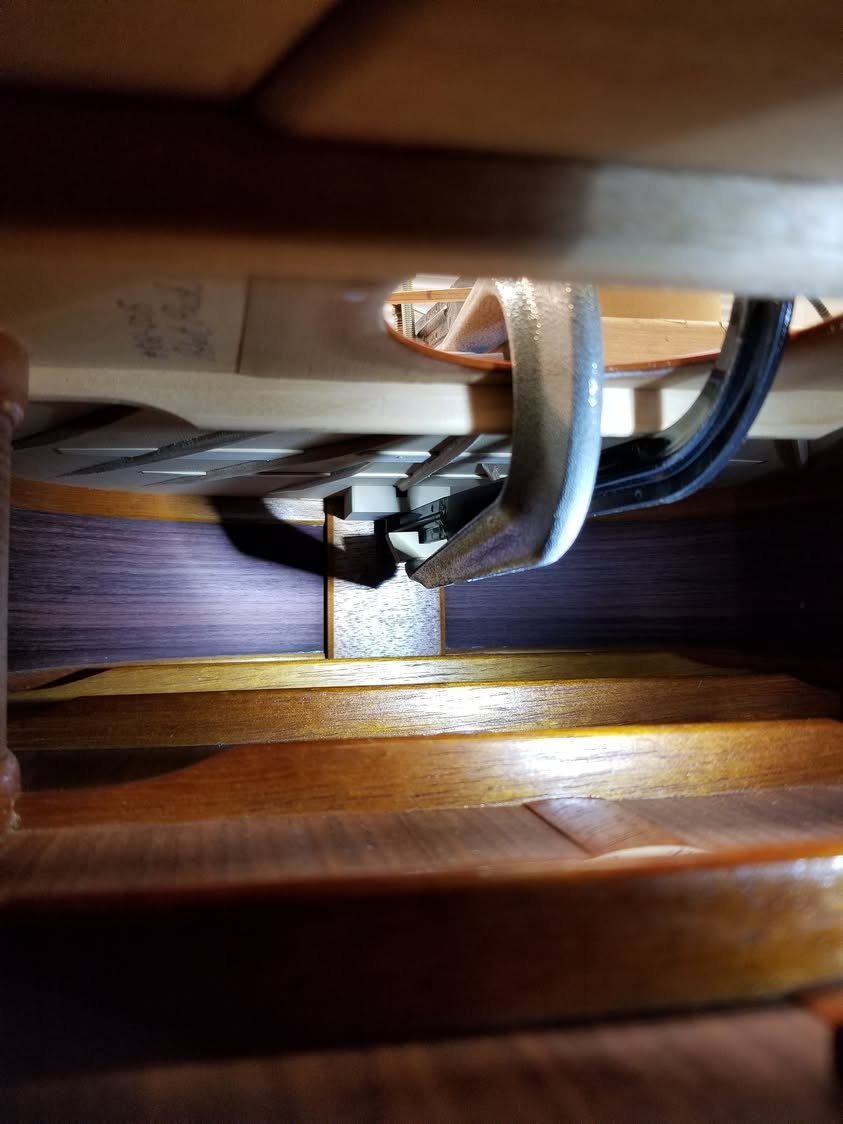
Mark Usherovich did a phenomenal job. The repair is visible if you know where to look, and nowhere else. I actually think the guitar became better after it. Possibly some tension in the top was relieved, and the guitar began to have a deeper voice. Sometimes what looks like a disaster turns out to be a good thing. The guitar went back to work. It is the guitar I recorded the Konstantin Vassiliev album for Naxos on, and the one I play.
Making it fit
A guitar arrives finished. It does not arrive fitted.
Scale length was the first lesson. My first Ruck, № 611, built in 1971 and bought from Manuel, had a 660 mm string length, and it took me years to admit that it was simply too long for my hands. So when I ordered № 1061, I asked Ruck whether a smaller guitar might be possible. He said yes, and built me one with a 637 mm scale. I knew what it cost: a shorter scale lowers the tension, so the guitar wants higher-tension strings to feel and sound the way a 650 does with normal ones. With carbon trebles it plays as loud as a full-length guitar, and it was a trade I would make again.
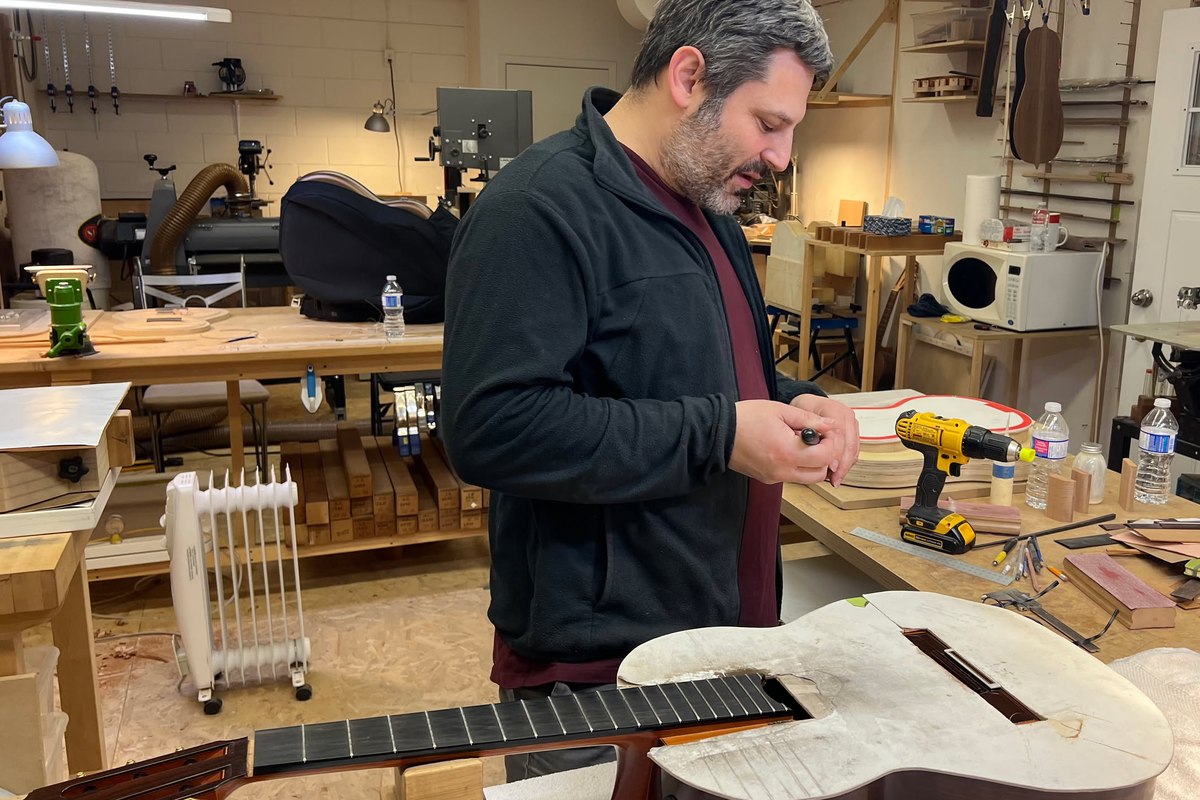
The neck took longer. It came with a back bow, and Ruck corrected it; the guitar came home with a neck thinner than before, and thinner than my hands wanted. My left hand tired quickly. I started exploring creative solutions to the thin neck and came up with the idea of gluing multiple layers of tape to the back of it. About six layers made it thick enough, and it really worked. I played it like that for some time, until Jeffrey Elliott made the fundamental fix.
In 2024 Jeffrey Elliott, a legendary luthier and a good friend, took the guitar on, as a tribute to Robert Ruck as much as a favor to me. It was on his bench in Portland for about ten months. He added a millimeter and a half to the fingerboard and gave it a gentle radius, refretted it with higher, wider frets, cut a new nut and two new saddles, and reworked those saddles for intonation. Cyndy Burton, his wife and a renowned maker herself, did the touch-up finish work. The result is a beautiful instrument that I can play for many hours without tiring: the tone I wanted, in balance with ease of playing, ergonomics and comfort.
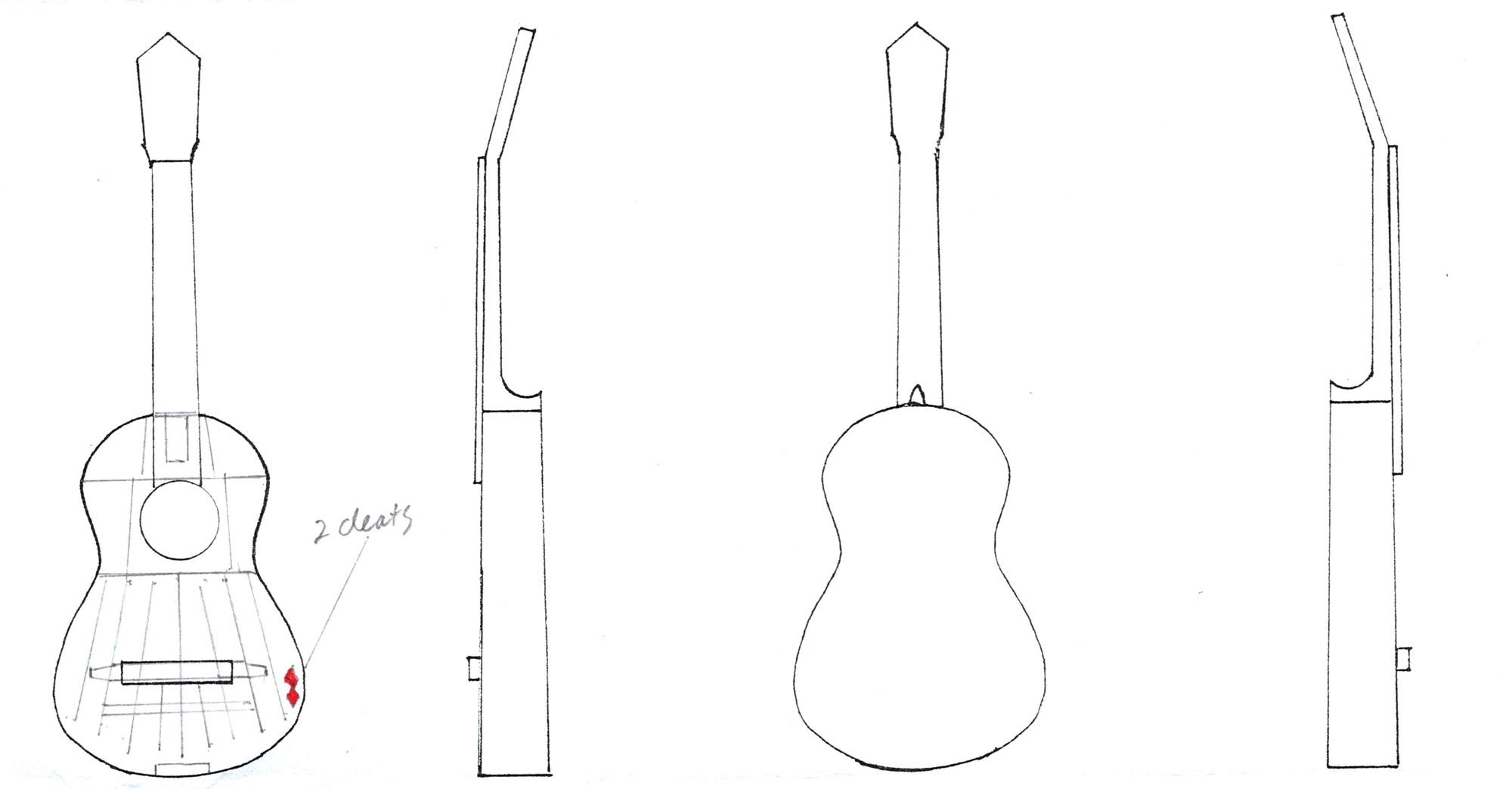
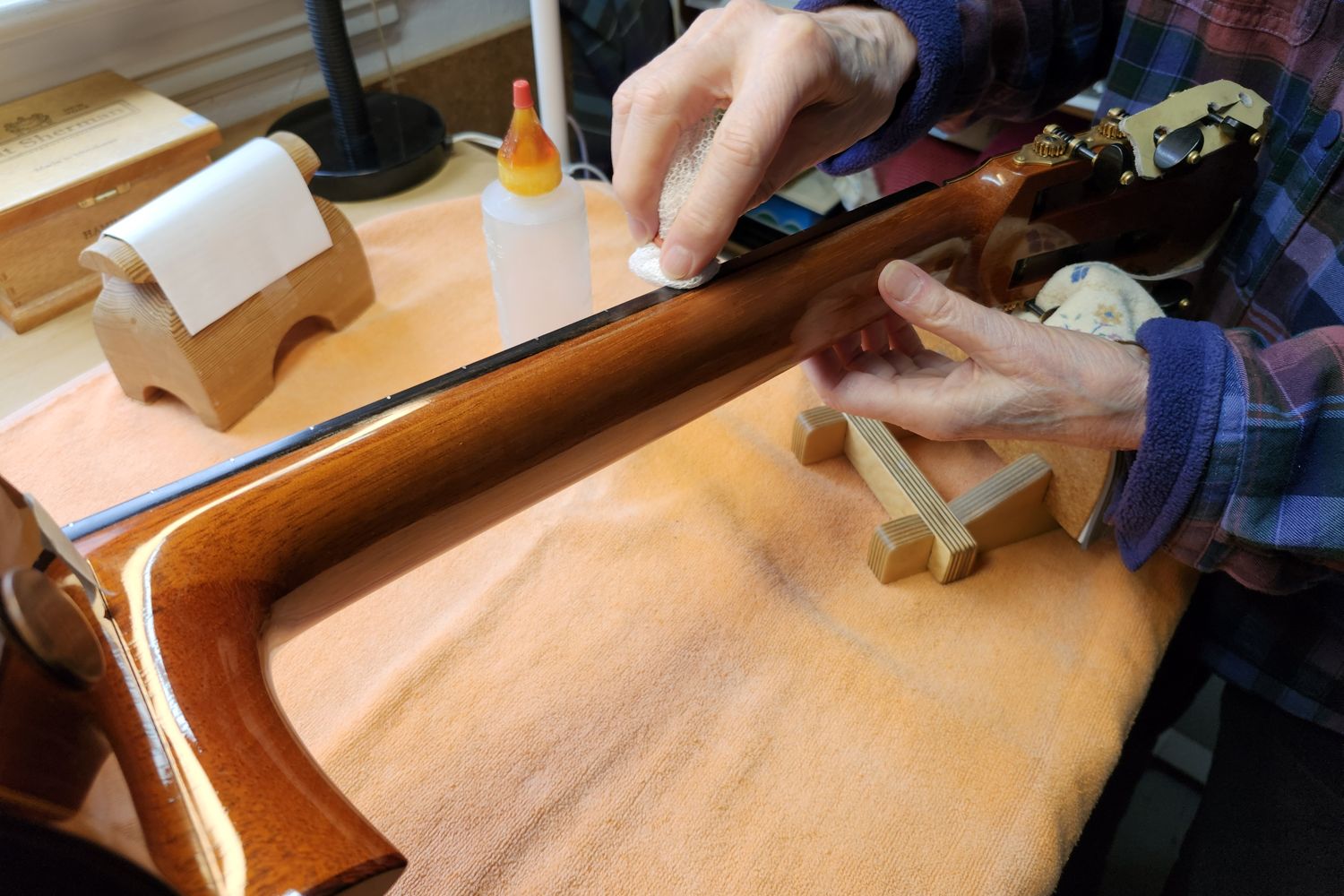
The Carnal went through the same process. Jeffrey Elliott refretted it with the same frets as the Ruck and made it a new saddle and nut, and then came the same patient search for the right intonation and the right height of each string. Everything else has been that search by finer means. The height of each string at the saddle and at the nut is a balancing act: raise a string and it projects more, but it becomes harder for the left hand to press; lower it and the hand is at ease, but the sound loses some of its carrying power. Both have to be in balance, and the right point is unique to each instrument and each player. There is no recipe for it; it is trial and error toward the best possible balance, and I am very sensitive to those fine details. The saddle changes more than volume and playability. It shapes the tone, and even each individual piece of bone has a sound of its own, because the density of the bone makes a difference. I have had saddles made again and again until each one was right, and I once had a guitar refretted twice, with curved frets and then with straight ones, simply to find out which my hand preferred. A small curve won, just enough that the fret follows the shape of the hand rather than the flat of a ruler.
We experience an instrument very intimately, and often we cannot point a finger at what it is that makes it feel a certain way. Those are the details I have learned to pay attention to, over many years of playing guitars, being around guitarists, and learning from luthiers.
Ten luthiers have had these guitars on their benches:
- Jeffrey R. Elliott
- Alan Perlman
- Brad Corney
- Kenny Hill
- Gregory Byers
- Mark Usherovich
- Glenn Canin
- Gary Lee
- Eric Reid
- Jesse Davis
The soundhole
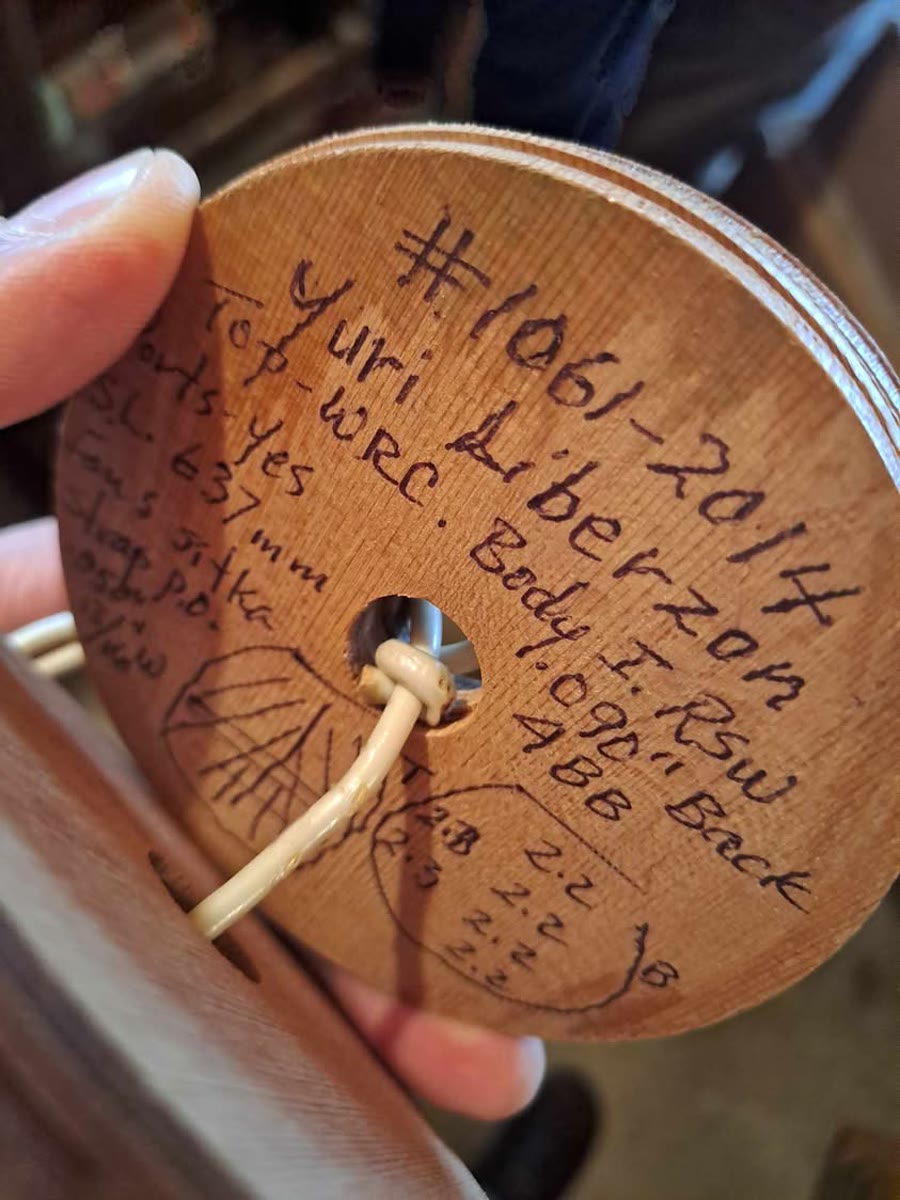
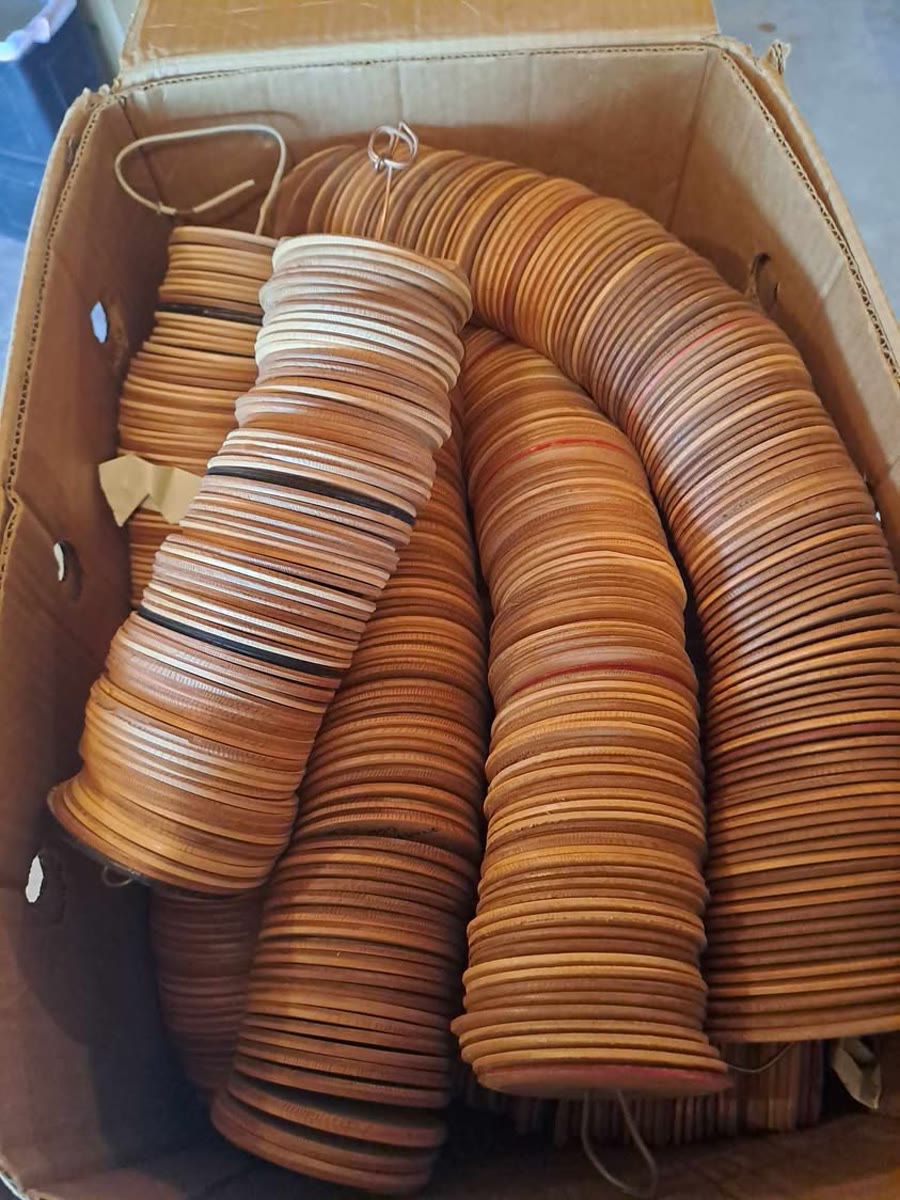
Robert Ruck wrote the specification of every guitar he built on the disc of wood cut out of its soundhole, and he kept them. Hundreds of them, in a box.
After he died, his woods and tools passed to Michael Cadiz, a luthier in Graz, Austria, who apprenticed with Ruck and was a classmate of mine at Peabody. One day in 2024 a photograph arrived from him with no explanation. I asked what it was. “The soundhole cutout for your guitar.”
Michael is now building a guitar for me from Robert Ruck's own wood, on Ruck's patterns, with a rosette in the herringbone style Ruck cut by hand. We have spent the past year on the phone between California and Graz, measuring № 1061 so that the new instrument fits the same hands. It is due in the autumn of 2026.